
Introduction to 111.09.150.182
The address 111.09.150.182 is classified as an Internet Protocol (IP) address, which serves a fundamental role in the realm of computer networking. IP addresses function as unique identifiers for devices connected to a network, similar to how a postal address identifies a physical location. They enable devices, such as computers and smartphones, to communicate with one another, facilitating the seamless transmission of data across the internet.
IP addresses are typically categorized into two main types: IPv4 and IPv6. The address 111.09.150.182 is an example of an IPv4 address, which comprises four numerical octets separated by periods, with each octet ranging from 0 to 255. This format is widely used for identifying devices in local and global networks. With the increasing number of devices connecting to the internet, IPv6 was introduced to accommodate the growing demand for more unique addresses, utilizing a longer hexadecimal format.
Each IP address operates like a unique identifier within the vast network, allowing data packets to be routed accurately from the source to the destination. When a device requests information from the internet, that request carries the IP address of the device along with the destination address. This ensures that the data reaches the appropriate recipient efficiently.
In summary, 111.09.150.182 embodies the essential characteristics of IPv4 addresses. Understanding the classification and function of such addresses is crucial for comprehending how devices communicate and interact over the internet. Moreover, grasping these foundational concepts of IP addresses allows users to appreciate the underlying principles of online connectivity and data exchange.
Technical Insights on 111.09.150.182
The IP address 111.09.150.182 is categorized under the IPv4 protocol, which comprises a 32-bit address space. It is essential to understand the technical characteristics associated with this address for various applications in networking and geolocation. One primary aspect is the geographical location of the IP address, which can be identified through IP geolocation services. These services utilize databases that map IP addresses to physical locations, providing insight into the city, region, and even the service provider associated with 111.09.150.182.
Typically, IP addresses are used for different purposes, such as facilitating communication between devices over the internet, sending data, and determining the identity of devices in a network. The significance of IP 111.09.150.182 also extends to its relationship with Internet Service Providers (ISPs). ISPs assign IP addresses from a pool they manage, making it imperative to analyze how this particular address can serve various users across different regions and networks.
In networking, 111.09.150.182 could be involved in several protocols, including TCP/IP, which is foundational to internet communication. Such involvement ensures reliable data transmission across the web. The role of this IP address in the context of modern networking practices also requires consideration of security protocols and configurations that might influence its usage. Furthermore, anyone examining the future of this IP should note that while IPv4 addresses are becoming scarce, the transition toward IPv6 is ongoing. However, 111.09.150.182 remains an essential part of the current internet backbone within the IPv4 landscape until full adoption of IPv6 occurs.
Security Implications of 111.09.150.182
In today’s digital landscape, IP addresses like 111.09.150.182 play a crucial role in network security. Each IP address has the potential to be exploited by malicious actors who seek to infiltrate systems, steal data, or launch attacks. This specific IP address, among others, can be associated with various security concerns that need to be addressed to ensure robust cybersecurity measures are in place.
Common vulnerabilities related to IP addresses such as 111.09.150.182 include unauthorized access and exploitation of software weaknesses. Attackers can exploit open ports, weak passwords, or unpatched systems, providing them with gateways into secure environments. Specific IP addresses can also be linked to certain types of malicious activities, such as Distributed Denial of Service (DDoS) attacks, phishing schemes, and malware distribution.
The misuse of IP addresses can result in significant risks not just to individual users but also to organizations. For example, an attacker could leverage 111.09.150.182 to conduct reconnaissance on vulnerable networks, gather sensitive information, and execute targeted attacks. Therefore, it is critical for network administrators to monitor traffic associated with this IP address for any suspicious activity.
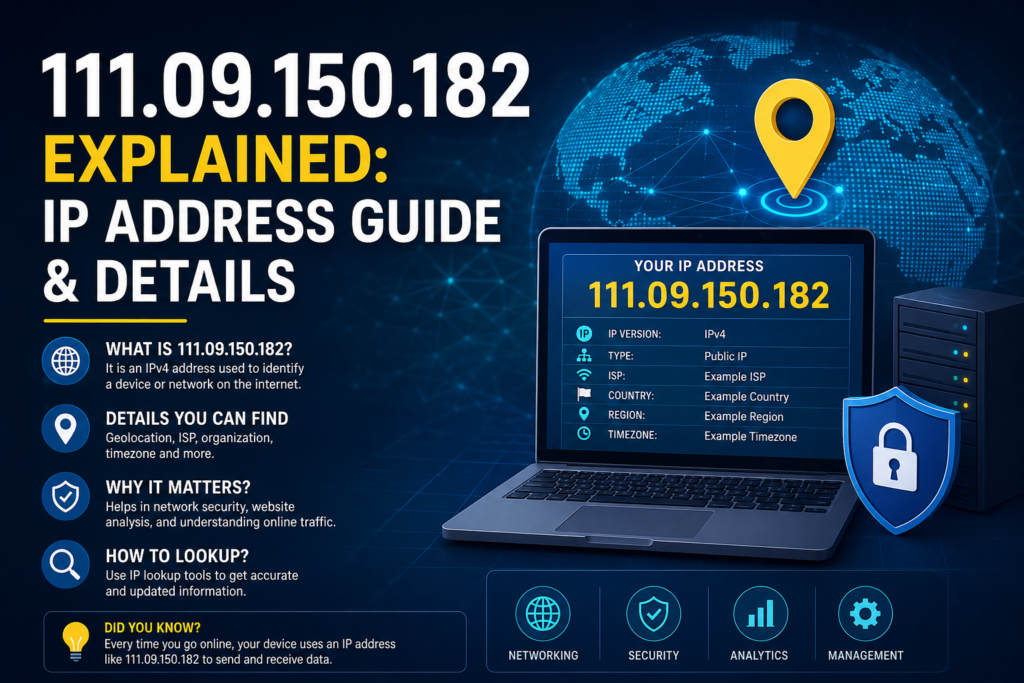
To mitigate the risks associated with IP addresses such as 111.09.150.182, best practices must be implemented. Regular updates and patches for software and hardware, configuring firewalls, and employing Intrusion Detection Systems (IDS) are fundamental steps. Furthermore, organizations should educate employees about the importance of recognizing potential phishing attempts and the significance of using strong authentication methods.
In conclusion, the significance of the IP address 111.09.150.182 extends beyond its mere numerical representation; understanding its security implications is essential for safeguarding networks against various cyber threats.
Conclusion and Future of IP addresses Like 111.09.150.182
In conclusion, the IP address 111.09.150.182 serves as a significant reference point within the vast framework of internet connectivity. As we have explored, it is important to recognize how such addresses are integral to the functioning of the internet, facilitating communication between different devices and networks. Each unique IP address, including 111.09.150.182, provides a distinct identity for devices, enabling seamless information exchange across diverse platforms.
Looking forward, the landscape of IP addresses is poised for transformation. The ongoing transition from IPv4 to IPv6 is particularly critical due to the exhaustion of available IPv4 addresses. IPv6 adopts a more comprehensive address space, which significantly alleviates the limitations imposed by the previous system. The emergence of an ever-increasing number of devices connected to the internet emphasizes the necessity for a robust addressing system. With the proliferation of smart devices and the Internet of Things (IoT), the demand for unique IP addresses is accelerating more than ever.
Furthermore, as 111.09.150.182 and similar addresses continue to play a pivotal role in daily internet activities, understanding the implications of this transition is paramount. Enhanced network management strategies will be required to accommodate an expanding number of connected devices without compromising performance or security. This evolving landscape mandates not only technological advancements but also a collective effort among businesses, regulatory bodies, and consumers to adapt to a future where IP addresses are managed efficiently.
Ultimately, the significance of IP addresses like 111.09.150.182 will continue to grow as the Internet continues to evolve. It invites all stakeholders to consider their roles in shaping this emerging future of connectivity, underscoring the need for adaptability in an ever-changing digital world.